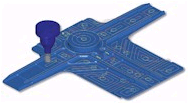
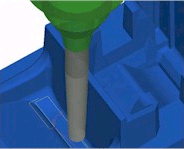
Horizontal surface machining has been
designed to use a flat-based cutter. This
strategy will dramatically reduce the time
it takes to finish machine the flat areas
on a complex 3D mould, and in finish machining
pockets in aerospace components.
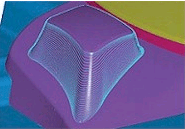
Each pass in a morphed "patch" -
the toolpath prior to linking - echoes the
shape of the one before, while suggesting
the shape of the one after. Akin to machining
with the flow of a surface but by creating
a set of boundaries with control points, the
operator can exercise tight control on how
a toolpath flows as it is mapped onto the
model.
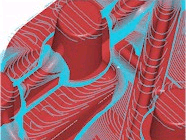
The system will calculate the rest areas of
a selected toolpath - areas left on the surface
that have been insufficiently machined - generate
a stockmodel with this information, and edit
passes to it.
This is a good way to generate efficient
toolpaths, reducing air-cutting and shortening
the machining time.
It is now possible to access two advanced
machining presets quickly and easily from
the menu, consolidating pencil milling and
constant surface stepover.
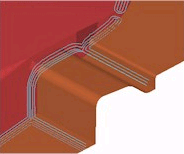
Parallel Pencil Milling Passes
A set number of passes are offset from an
active boundary or existing single line toolpath.
Tapered cutter support extends to carbide
insert button cutters, predominantly used
for roughing. To leave a tapered finish, it
is critical to rough with taper to leave a
material-on condition.
|